
Your car was repossessed. Start with the next document.
Use the notice in your hand, the sale timing, and the right you are trying to exercise. This site separates cure or reinstatement, redemption, personal-property recovery, sale procedure, and deficiency questions instead of folding everything into generic debt advice.
Work from the paper trail
Pull the contract, repossession notice, sale notice, payment history, and any post-sale explanation before comparing dates or amounts.
State law changes the answer
Cure rights, reinstatement, notice timing, deficiency limits, and lawsuit deadlines are not uniform.
Open the 50-state deskDo not collapse these three rights
They use different payment amounts and different legal triggers.
Catch up under a contract or state-law mechanism when one exists.02Redeem
Pay the amount required to redeem collateral before disposition.03Deficiency response
Audit the sale and post-sale accounting before treating a collection figure as settled.
Who took the vehicle, when, and where it went.
Public/private sale method and the stated timing.
Sale proceeds, charges, credits, surplus or deficiency.
Publication rule
State numbers go live only after the current official statute, court, attorney-general, or agency source is checked.
General UCC concept ≠ state-specific deadline.Start with the event that already happened.
Each guide is built around one procedural question and the records needed to answer it. State-only numbers are separated from the general secured-transactions framework.
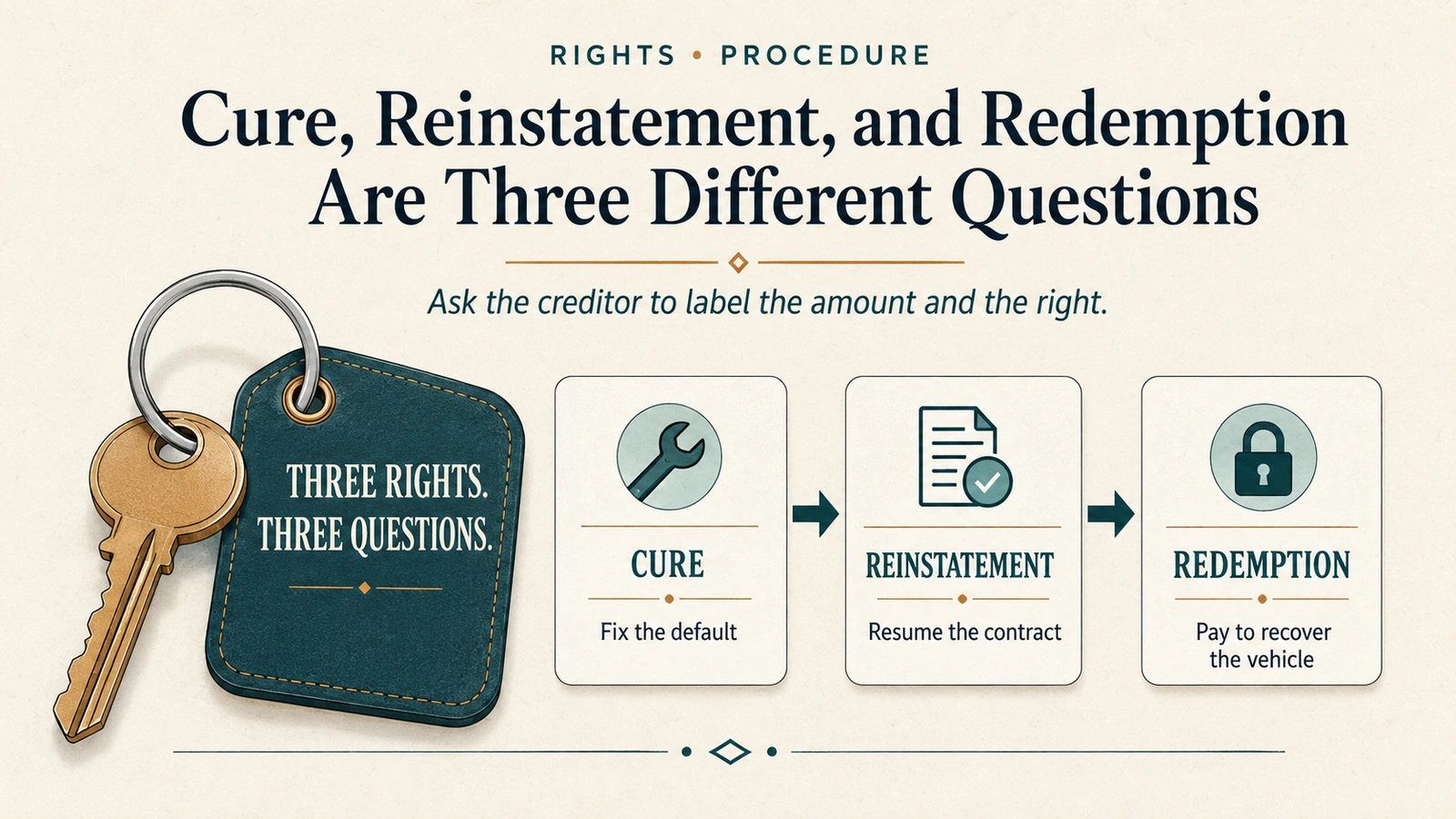
Cure vs. redemption: two different ways of getting a vehicle back
Separate the delinquency-cure question from the full-balance redemption question before requesting a quote or relying on a deadline.
Read guide →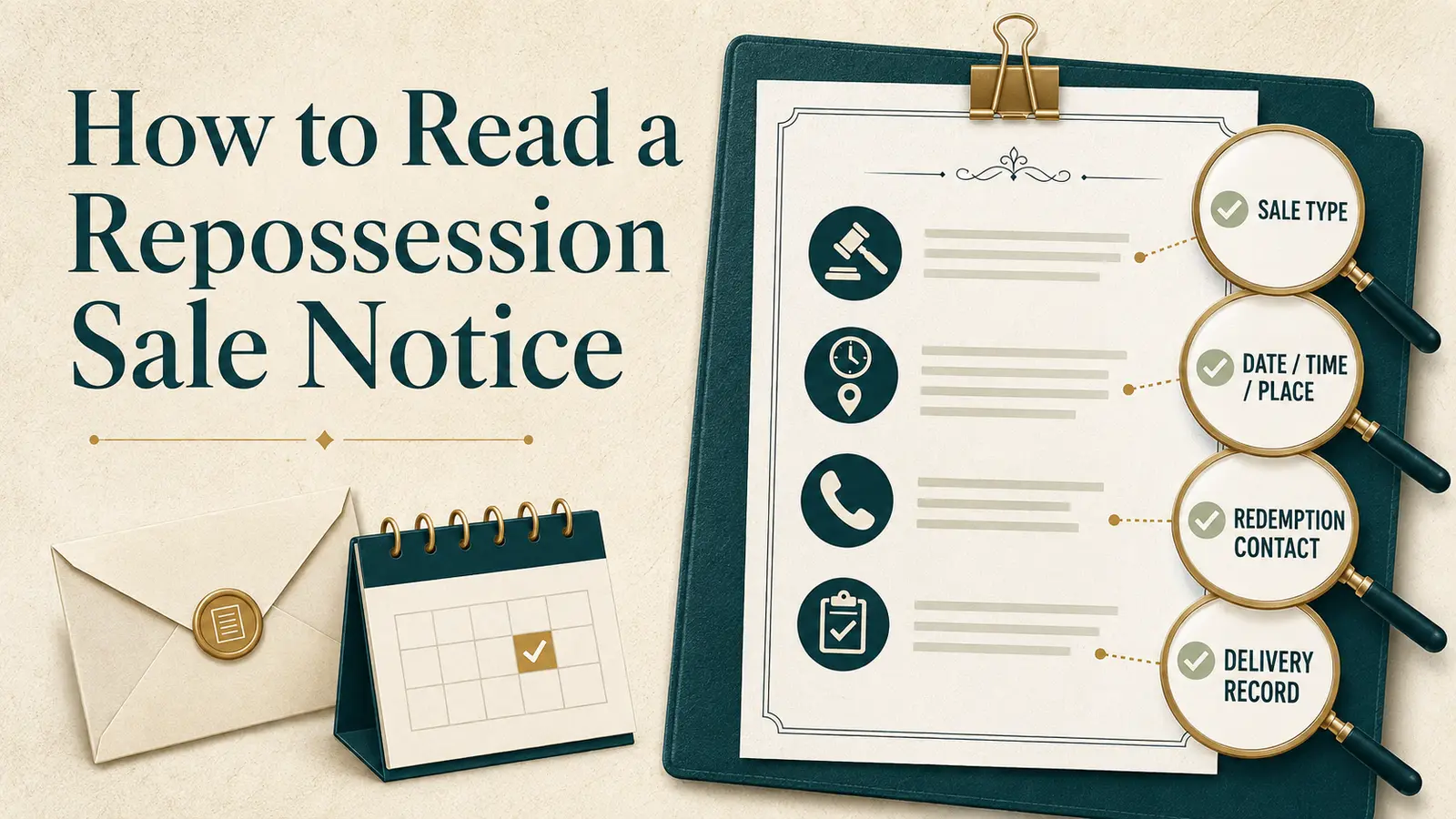
A sale notice arrived — audit the form before the sale date
Read sale method, timing, redemption language, and contact information as separate parts of the notice.
Read guide →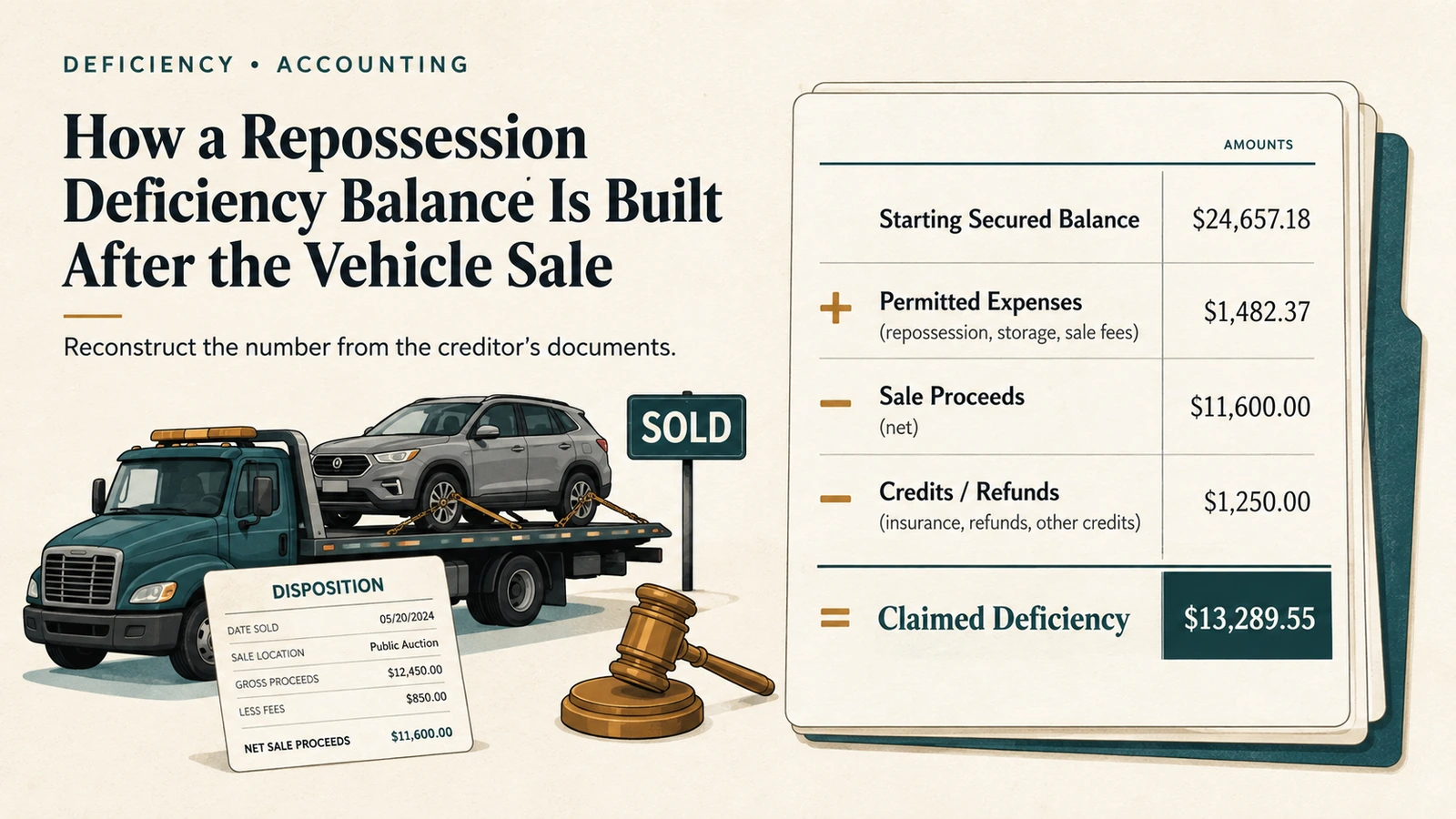
Trace a deficiency from the account to the sale ledger
Reconcile the balance, sale proceeds, repossession charges, credits, and the creditor's explanation instead of treating one collection number as self-proving.
Read guide →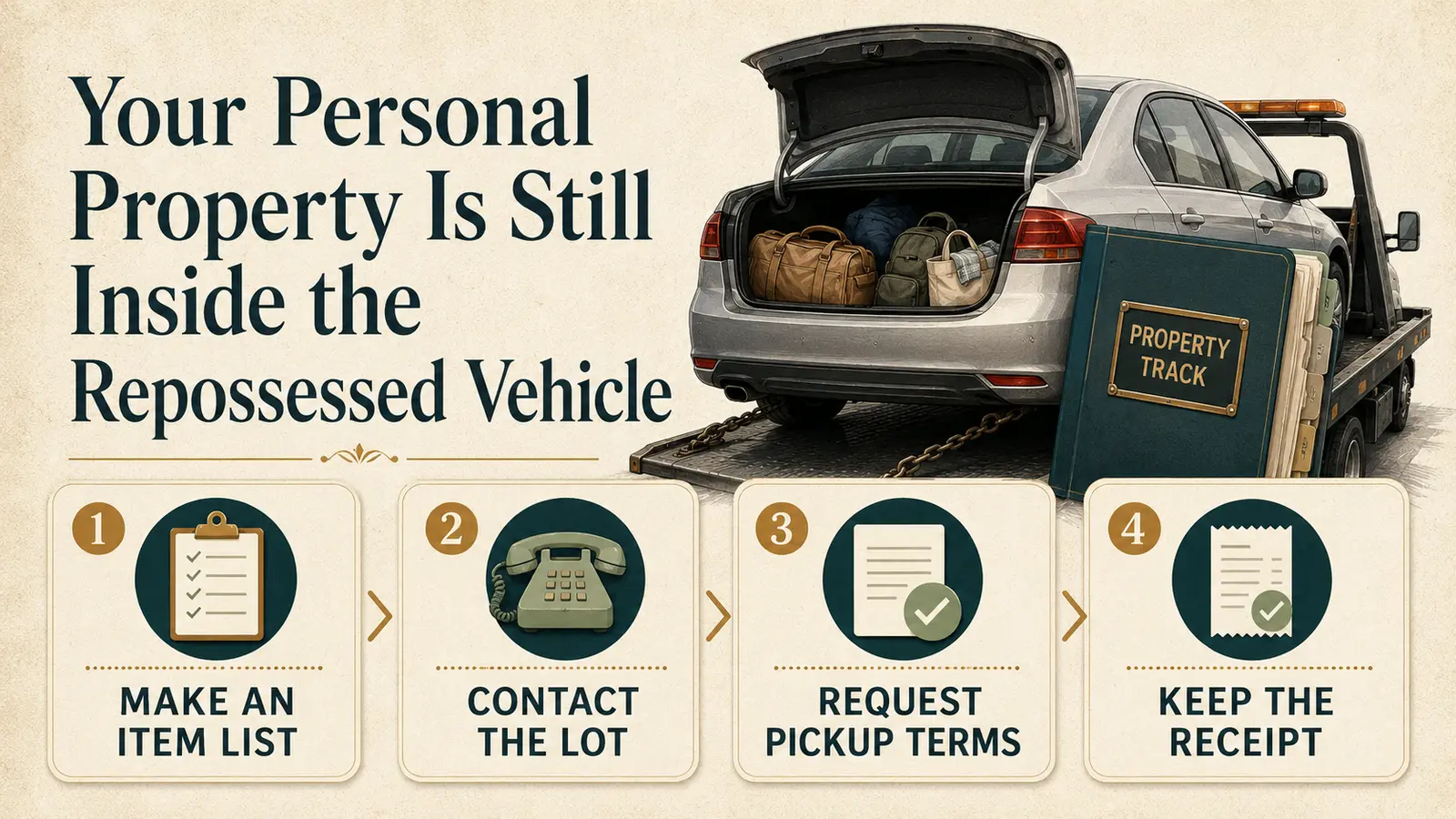
Recover personal property without mixing it into the loan dispute
Create an inventory, locate the holding lot, document the release, and use the state-specific rule for fees or disposal when applicable.
Read guide →A narrow legal-process library, not an auto-finance magazine.
The information architecture stays close to the user's next task: core rules, disposition mechanics, 50 state pages, and special situations such as SCRA, bankruptcy stay, co-signers, credit reporting, and deficiency lawsuits.
Procedure guides
Cure, redemption, notices, commercially reasonable sale, accounting, surplus, deficiency, and sale records.
Browse guides →State-by-state rules
Each state page has its own source set and deadline strip. The copy is not generated by swapping state names into a shared paragraph.
Browse states →When another rule changes the sequence
Active-duty protections, bankruptcy stays, belongings, co-signers, out-of-state repossessions, credit disputes, and court papers.
Open situations →